A Crest Is Worth More Than a Logo
A Crest Is Worth More Than a Logo
A logo wants to be remembered. A crest wants to be read. One is built so a stranger recognises a company. The other is built so the right person recognises themselves. They look similar on a garment. They are opposites in meaning.
For a century, branding has trained us to treat the mark on our clothing as a signal of price and recognition — a thing pointing outward at the crowd. But there is an older grammar of symbols, and it points inward. A crest doesn't say "this is who made it." It says "this is who I am." That single shift changes everything the mark is worth.
A Logo Is a Pointer. A Crest Is a Container.
A logo is a pointer — it refers you to a company, a price tier, a marketing universe somewhere outside the wearer. Its entire job is association. That's why it's interchangeable: swap one luxury logo for another and the function is identical, only the brand-name changes. The wearer is incidental.
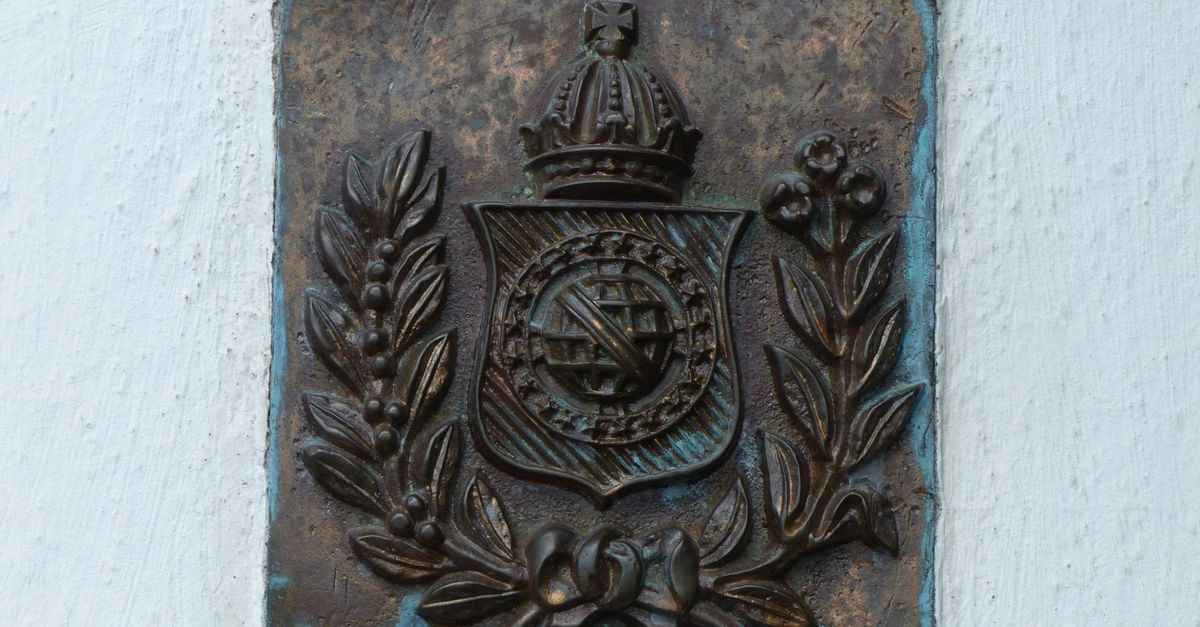
A crest is a container. It holds meaning inside itself — encoded attributes, allegiances, an identity that travels with the symbol rather than pointing away from it. You don't read a crest by knowing the brand. You read it by decoding what's in it. That's why crests survived for a thousand years before "branding" was a word: they were never about the maker. They were about the bearer. This is the deeper layer beneath fashion as a signal system that encodes identity — the mark is a message, not an advertisement.
What a Crest Encodes
A real crest is a compression format for identity. Done properly, it carries several layers at once, legible to anyone who knows the grammar:
- An element — the elemental nature it claims (earth, fire, water, void), which sets its whole temperament.
- A creature — the archetype it embodies, a single image that conveys an entire character.
- A colour and a motto — the band of meaning it occupies and the philosophy it stands by.
- A position — where the bearer stands in a larger structure, not just which brand they bought.
Compare that density to a logo, which encodes exactly one bit of information: this brand. A crest is worth more because it says more — and what it says is about the person wearing it, not the company selling it. This is what separates wearing a logo from wearing a position.
Why the Old Grammar Still Reads
It's tempting to think crests are archaic — a thing of banners and shields, replaced by clean modern logos. But the grammar never died, because the human need it served never went away: the need to know, at a glance, who someone is and where they stand. Logos answered a different need — mass recognition for mass commerce — and they answered it well. What they cannot do is carry identity, because they were never built to. A logo is optimised to be remembered by millions; a crest is optimised to be read by the few who share its language. Those are different jobs, and the second one is the one that matters when the question is who you are rather than what you bought. The reason crest-grammar still reads is that it's the original technology for compressing identity into an image — and nothing has actually replaced it, only distracted from it.
You Can Rent a Logo. You Have to Belong to a Crest.
Anyone with money can rent a logo. No one can rent a crest, because a crest you didn't earn is a costume — and a misworn crest reads as exactly that to anyone who can decode it. The logo's value is that everyone can have it. The crest's value is that not everyone can. One is democratic in the worst sense (identical for all who pay); the other is specific in the best (true only for those it belongs to). This is also why a crest can't be counterfeited into meaning: forge the image and you still haven't forged the belonging it stands for, the way a recorded position resists reproduction.
Inside Ytinu City
Ytinu City runs on crests, not logos. Each of the 13 Houses carries its own, and the crest is an encoded identity — element, creature, colour, motto, and the house's role in the city, all compressed into one mark. The Verdant's crest carries Earth and the Golem, Forest Emerald, "what we build does not fall," the role of the city's builders. The Flameborn's carries Fire and the Phoenix, Phoenix Ember, "we burn so others see." The Voidwalkers' carries Void and Fenrir, Void Black, and the thirteenth house's permanent constitutional veto. When you take a Foundation Pass, your custom made-to-measure jacket bears your chosen house's crest — not a logo, a container of meaning tied to your house and pass number. The jacket comes with every Pass across all four tiers and is never sold separately. The crest is the physical signal of your house and tier — readable by anyone fluent in the grammar, worthless to anyone wearing it falsely. A logo tells the world what you bought. A crest tells the world who you are.
Wear a crest, not a logo — at ytinumoc.com
Something isn't adding up. Once you do, there's no going back.
Enter Ytinu City